Building strength from within

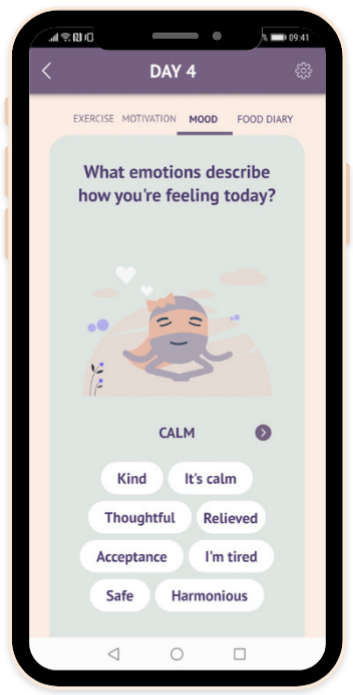
Progress Me helps teenagers, families, and healthcare providers prevent and overcome eating disorders — through science-backed tools that build real self-esteem.

CBT-based exercises Mobile app Parent support Healthcare tools
Get in touch Learn more
70%
don't receive adequate care from the healthcare system
13–18
years — the most critical age for early intervention

Who we help

Support for everyone involved

Eating disorders affect individuals, families, and communities. Progress Me offers targeted tools and resources for each of them.

🌱

Teenagers & young adults

Build genuine self-esteem through guided CBT exercises, self-assessments, and challenges. Progress Me meets you where you are — on your phone, at your pace, without judgement.

❤️

Parents & families

Learn how to support a loved one with an eating disorder without adding pressure. Our parent portal gives you evidence-based guidance, tools, and a caring community.

🩺

Healthcare providers

Bridge the gap between primary and specialist care. Progress Me Care lets psychologists and therapists monitor patient progress, screen risk levels, and support recovery between sessions.

Our method

Evidence-based, built on real science

Progress Me is grounded in Cognitive Behavioural Therapy (CBT) — one of the most clinically validated approaches for changing behaviour and thought patterns. Our exercises are developed together with psychologists and CBT therapists.

1

Self-assessment

Users begin with a structured self-test to map their current self-image, thought patterns, and emotional baseline.

2

Cognitive restructuring

Exercises help identify and challenge negative inner beliefs — replacing them with functional, positive alternatives rather than empty affirmations.

3

Guided challenges

Social situations, school presentations, meeting new people — step-by-step exercises help users build confidence in real-life scenarios.

4

Progress & gamification

Every step forward is recognised. Progress Me uses gamification and guided audio exercises to sustain motivation and reduce anxiety.

"We don't aim to make you feel better about yourself — we give you the tools to become better at being yourself."

— The Progress Me approach

Know the signs

Understanding eating disorders

Eating disorders are serious mental health conditions — not lifestyle choices. Early recognition and support make a profound difference in recovery.

Anorexia nervosa

Characterised by an intense fear of gaining weight and a distorted body image. Individuals severely restrict food intake, often to dangerous levels. Anorexia has the highest mortality rate of any mental health condition.

Bulimia nervosa

Involves cycles of binge eating followed by compensatory behaviours such as purging, fasting, or excessive exercise. Often hidden and accompanied by deep shame and secrecy.

Binge eating disorder (BED)

Recurring episodes of eating large quantities of food, often rapidly and to the point of discomfort. Unlike bulimia, there is no compensatory behaviour. Associated with significant distress and feelings of loss of control.

ARFID

Avoidant/Restrictive Food Intake Disorder involves extreme selective eating not driven by body image concerns. Common in younger children but can persist into adulthood, causing nutritional deficiencies.

Orthorexia

An obsessive focus on "eating healthy" that becomes so rigid it interferes with daily life and social functioning. Not yet formally classified, but increasingly recognised by clinicians.

Other specified disorders (OSFED)

Many people don't fit neatly into one category but still suffer significantly. OSFED captures this range — and is actually the most common eating disorder diagnosis.

~200,000
people in Sweden are estimated to live with an eating disorder at any given time
90%
of those affected are between 12 and 25 years old
10 yrs
average time between onset of symptoms and receiving a diagnosis
5–10%
of anorexia cases are fatal — the highest rate of any psychiatric illness

Our story

Born from lived experience

Petronella Melén, founder of Progress Me
"The system wasn't there for me. So I found my own way — and I realised it could help others too."

Petronella Melén, founder of Progress Me, struggled with an eating disorder as a teenager. Like so many others, she turned to the healthcare system for help — and found little. The waiting lists were long, the support was fragmented, and the gap between needing help and actually receiving it felt impossible to cross.

So Petronella found her own path to recovery. Not through specialist treatment, but through a slow, deliberate process of rebuilding her self-esteem and self-confidence — changing the way she thought about herself from the inside out.

That journey became the foundation of Progress Me. Drawing on her lived experience and the knowledge gained along the way, Petronella set out to create the tool she wished had existed when she needed it most. A science-backed, accessible, compassionate resource for young people who are falling through the cracks of the system.

Today, Progress Me is a non-profit, member-driven organisation working to make sure no one has to face an eating disorder alone — regardless of where they live or what support the system can offer them.

— Petronella Melén, Founder & CEO, Progress Me

Who we are

A non-profit built on solidarity

Progress Me is a member-based non-profit organisation. We exist for one reason: to help those who aren't getting help from the system. Every membership, donation, and partnership goes directly toward building better support.

Member-powered

Our community of members forms the backbone of everything we do. Together, we advocate, build, and support each other.

Filling the gap

We work between primary and specialist care — where support is most needed and least available. No one should have to wait years for help.

Always evolving

We invest in research and development to continuously improve our tools, informed by the latest clinical evidence and real user feedback.

Get in touch

Ready to learn more?

Whether you're a young person looking for support, a parent seeking guidance, or a healthcare professional interested in partnering with us — we'd love to hear from you.

Send us an email →

Or write directly to info@progressme.se